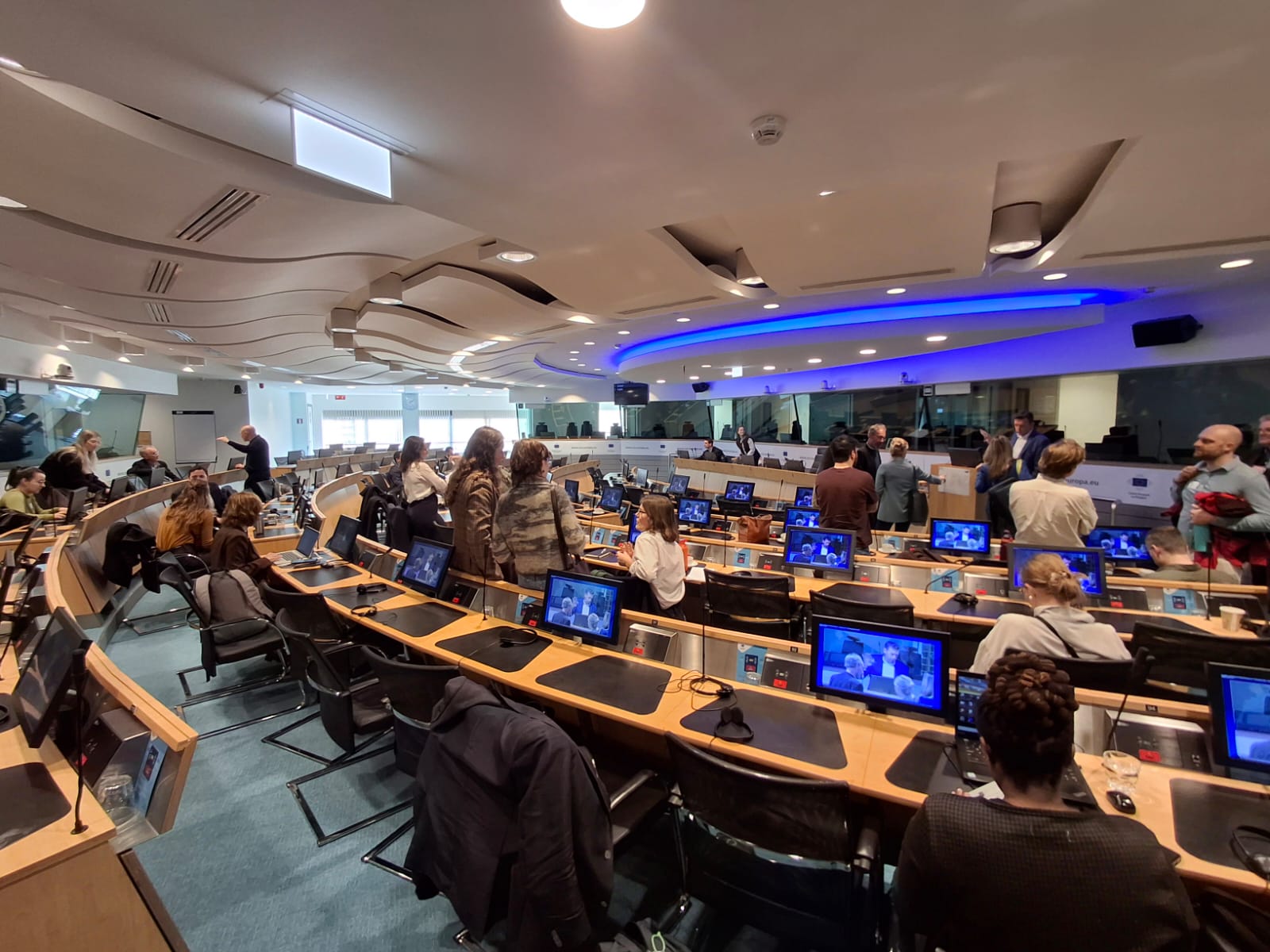
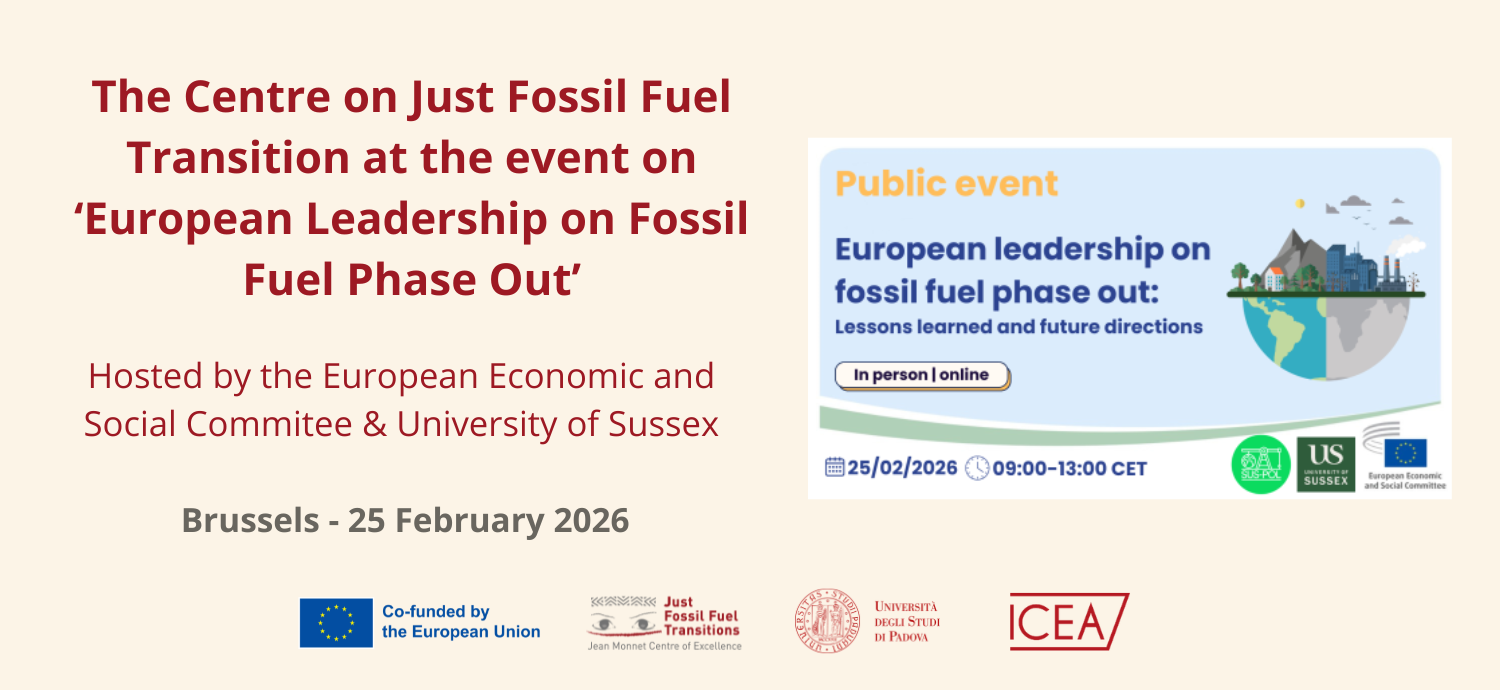
Brussels, February 2026 — On 25 February 2026, we participated in the event “European leadership on fossil fuel phase out: Lessons learned and future directions”, hosted by the University of Sussex’s SUS-POL Research Programme and the European Economic and Social Committee.
The event came at a critical moment for energy transition, following the outcomes of COP30, amid growing calls for concrete roadmaps to phase out fossil fuels, and ahead of the world’s first summit on a just transition away from fossil fuels in 2026. Discussions focused on how EU leadership, policies, and experience can accelerate action both within Europe and globally.
The event brought together representatives from EU institutions, businesses, trade unions, civil society organisations and leading researchers working on fossil fuel phase-out to discuss lessons learned within the European Union and identify possible future directions for EU leadership on this issue.
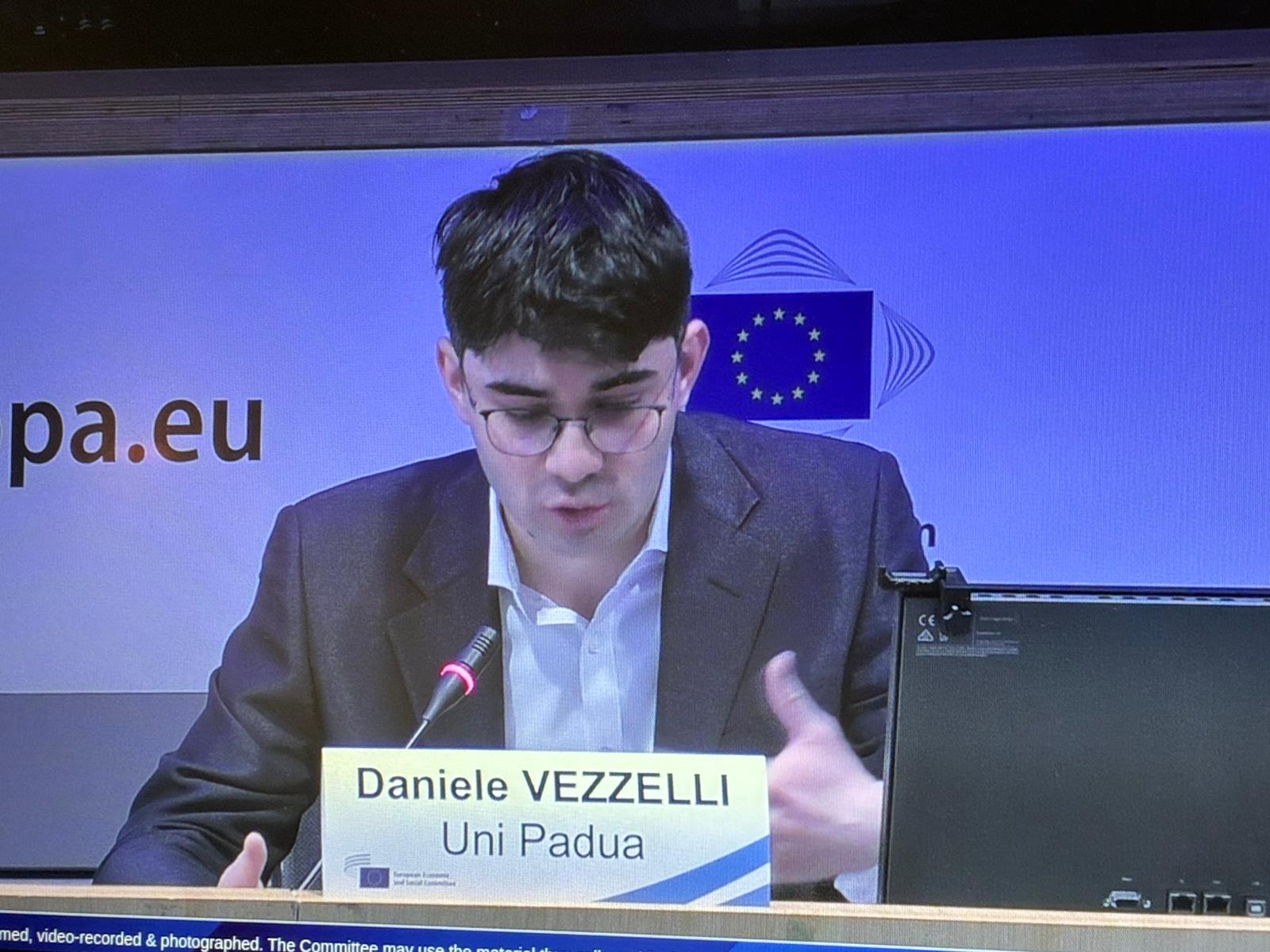
The Jean Monnet Centre of Excellence on Just Fossil Fuel Transition contributed with a speech by Daniele Vezzelli (PhD candidate, University of Padova) in the session “Lessons from EU first movers.”
Italy’s Experience with Fossil Fuel Policies
The presentation focused on Italy’s experience with fossil fuel supply-side policies and the political dilemmas surrounding attempts to limit domestic oil and gas production. Although Italy is heavily dependent on fossil fuel imports, with more than 90% of oil and gas imported and domestic extraction covering only a small share of national demand, the case illustrates how easily domestic oil and gas production can regain political centrality under energy security narratives, despite its limited contribution to overall demand. More broadly, the case shows how fragile supply-side measures can be when climate governance is weak and geopolitical dependence reshapes political priorities.
To exemplify this dynamic, the presentation focused on the trajectory of PiTESAI (the Plan for the Sustainable Energy Transition of Suitable Areas).The PiTESAI stopped new oil exploration, limited gas exploration and introduced spatial environmental criteria to define suitable and unsuitable areas for extraction. Following the 2022 energy crisis, the plan was annulled in 2024 by the Lazio Administrative Court after industry appeals and was then abandoned by the government through the Environment Decree, which reassigned a central role to gas production in response to energy security concerns. Suspended permits were reactivated and previously restricted areas reopened, marking a renewed opening of gas extraction.
Key Lessons for the EU
The presentation highlighted three key lessons from the Italian experience for the European debate:
- First, short-term energy security narratives can override long-term decarbonisation objectives. Energy security is often used to justify new domestic extraction, even where production is marginal and does not substantially reduce vulnerability. For the EU, this implies the need to redefine energy security, shifting the focus from new extraction and gas infrastructure towards electrification, storage, grid integration and demand reduction, supported by clear and consistent European policy signals. Ambiguity around the role of fossil fuels, particularly gas framed as a “transition fuel,” allows Member States to interpret EU climate and energy policy in flexible ways. In Italy, for example, LNG imports and related infrastructure were expanded even as domestic gas demand declined, illustrating how energy security considerations can influence investment decisions and create potential risks of overcapacity and stranded assets.
- Second, national upstream policies incorporating sustainability criteria are structurally fragile and easily reversible when they operate in isolation, lack broad stakeholder agreement and are not embedded in a strong, supportive, supranational framework. An explicit European framework on supply-side measures could, in principle, reduce the likelihood of policy reversals.
- Third, the political durability of supply-side action depends on territorial justice. In Italy, extraction is geographically concentrated: the Basilicata region alone accounts for around 80% of national oil production and hosts the largest onshore oil basin in the EU. Yet transition support for oil- and gas-producing territories remains limited at both national and European levels. For supply-side policies to endure, they must be embedded in credible regional diversification strategies. While the Just Transition Mechanism has primarily focused on coal regions, oil and gas territories also require structured support to avoid becoming political veto points. In this regard, strengthening territorial diversification would help reduce monocultural economic dependence and prevent extraction from being framed as indispensable for local employment and fiscal stability.
A video recording of the event is available on the EESC website.